How to find a GPS tracker on your car
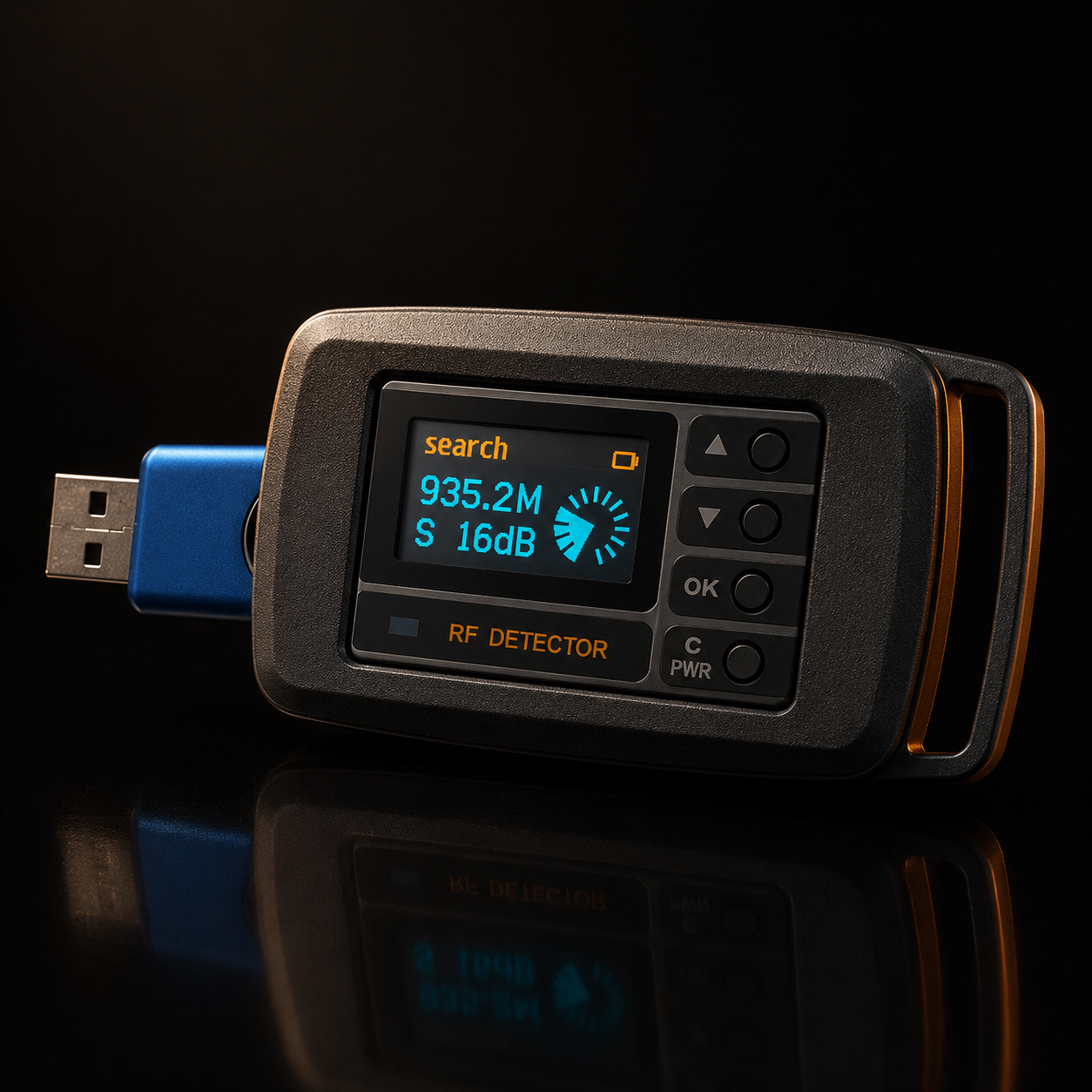
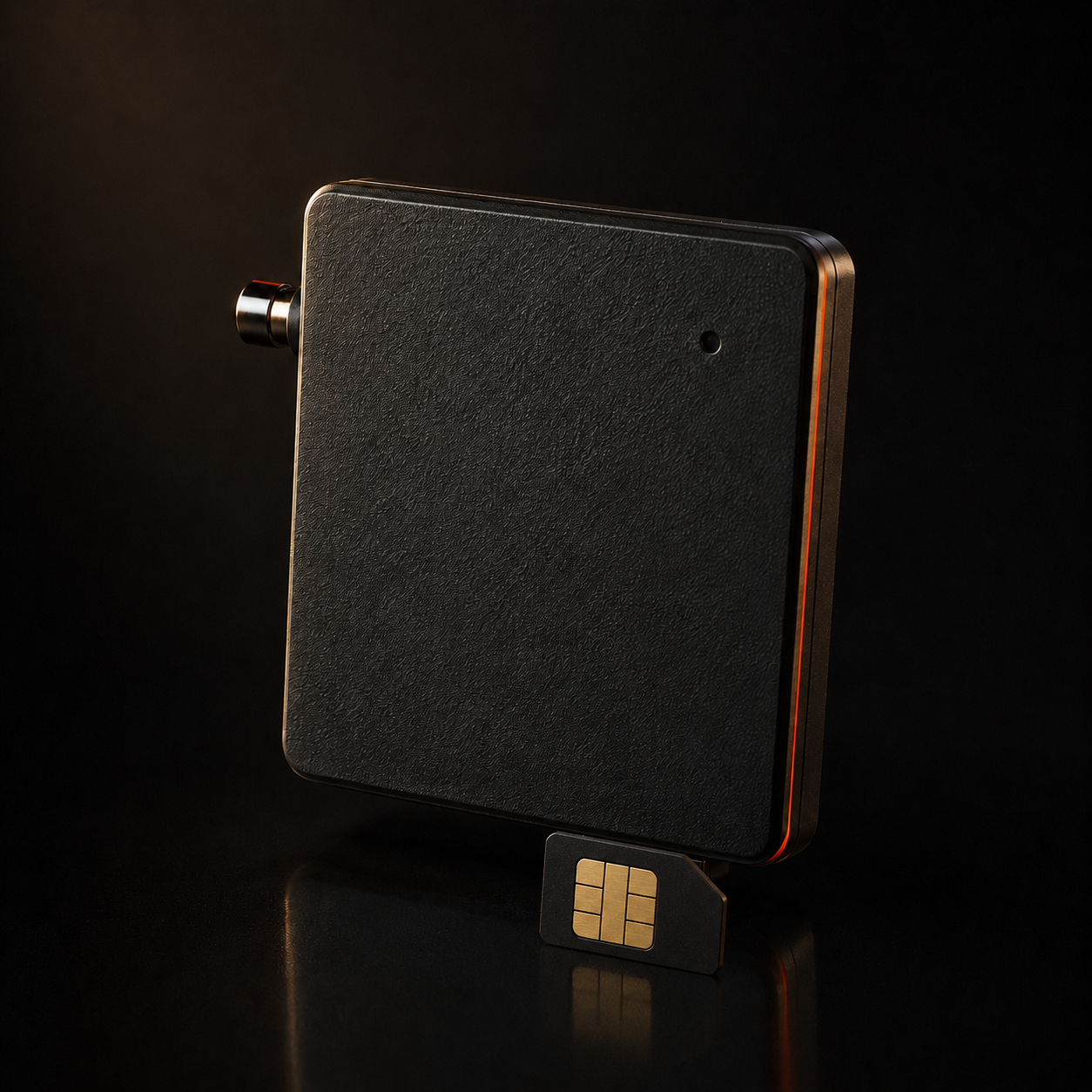
Consumer GPS trackers fall into two families. Live trackers report position over GSM or LTE — they transmit, so a radio-frequency detector can find them. Passive loggers store coordinates internally and are retrieved later by whoever fitted them; they emit nothing and are found only by hand.
That distinction is the whole method. Sweep first to catch anything transmitting, then search physically for anything that is not.
- Someone consistently knows where you have been without being told
- A magnetic box, taped bundle or unfamiliar module in a wheel arch or under the bumper
- A hard-wired device spliced into the OBD-II port or fuse box
- Recent unexplained battery drain or an unfamiliar dongle left plugged in
Step by step,
in order.
Park away from noise
Move the car out of underground parking and away from dense Wi-Fi. Turn off the ignition and your own phone's hotspot so the baseline is clean.
RF sweep the perimeter
Walk the car slowly with the detector low: front and rear bumpers, wheel arches, sills, then the interior. Live trackers report in bursts, so give each zone time.
Search the exterior by hand
Under the bumpers, inside the wheel arches, along the frame rails and behind the licence plate. Magnetic cases attach to any flat steel surface.
Check the cabin and ports
OBD-II port, under the dashboard, beneath and behind the seats, in the spare-wheel well and the boot lining. Hard-wired units usually sit near existing looms.
Repeat when the car is moving
Some trackers only transmit while in motion. A second sweep after a short drive catches motion-triggered reporting cycles.
Document before removing
Photograph the device in place with the position visible. If you suspect stalking or harassment, involve the police before you detach anything.
What this
actually takes.
- Passive loggers transmit nothing and can only be found by physical search.
- Underground parking, steel structures and dense urban RF degrade both detection and positioning.
- A tracker that reports on a long interval may be silent for most of your sweep — repeat the check.
Frequently
asked.
Can a bug detector find a GPS tracker on a car?
It can find trackers that transmit. Live GPS trackers report their position over GSM or LTE, and an RF detector picks up those transmissions. Passive loggers that only store coordinates on internal memory emit nothing and must be found by physically searching the vehicle.
Where are GPS trackers usually hidden on a vehicle?
Four zones cover most installations: the exterior underside (bumpers, wheel arches, frame rails, behind the plate), the OBD-II port and fuse box, the cabin (under and behind seats, under the dash), and the boot or spare-wheel well.
How long does it take to check a car for a tracker?
A full check takes about twenty minutes: an RF sweep of the perimeter and interior, then a hands-on search of the four zones. Add a second sweep after driving to catch motion-triggered trackers.
What should I do if I find a tracker on my car?
Photograph it in place before touching it, note the date, time and location, and contact the police — particularly if you suspect stalking or domestic abuse. Removing or destroying the device first can weaken a case.
Hotel room sweep
Check a room for hidden cameras and transmitters before you take the first call.
Airbnb & short-term rental check
A privacy check for rentals, where hosts control the fixtures and the network.
Executive travel in the Gulf
A repeatable privacy check for suites, meeting rooms and cars across Dubai, Riyadh and Doha.
Villa & household privacy
Check a villa or serviced residence where contractors, staff and agents have all held keys.
Executive & boardroom meetings
Protect a sensitive meeting: sweep the room, control signals, secure the calls.
Family office & DIFC boardroom
Meeting hygiene for family offices and investment committees in Dubai, Abu Dhabi and Riyadh.
Yacht & private aviation
Clear a cabin or charter aircraft where crew, charter guests and yard contractors rotate.