Hidden camera detection for hotel rooms
Most hidden devices found in short-stay accommodation are consumer-grade: Wi-Fi cameras in smoke detectors, alarm clocks or USB chargers, and small GSM audio transmitters left behind by a previous occupant. Almost all of them transmit — which is exactly what makes a radio-frequency sweep the fastest way to check a room you did not prepare.
The goal is not paranoia. It is a repeatable check you can run in the first quarter-hour of a stay, before you unpack, take a call, or open a laptop containing anything you would not publish.
- A device pointed at the bed, desk or bathroom door from an unusual height
- Pinhole apertures in smoke detectors, air vents, clocks or decorative mirrors
- Cables that terminate in nothing, or power adapters with no matching device
- Furniture repositioned so an object has an unobstructed line to the room
- An RF reading that rises sharply as you approach one fixed point
Step by step,
in order.
Baseline the corridor
Take an RF reading outside the room first. Hotel Wi-Fi, neighbouring rooms and building systems set the noise floor you will be comparing against inside.
Sweep the perimeter
Walk the walls slowly at chest height with the detector held away from your body, then repeat at knee height. Note every point where the reading climbs.
Work the sight lines
Concentrate on anything with a clean view of the bed, desk and bathroom door: smoke detectors, clocks, TVs, mirrors, air vents, decorative objects.
Isolate the source
Where a signal rises, close in on it. A directional reading that peaks on one object and falls off as you move away identifies a fixed emitter.
Inspect optically
Lens detection catches devices that record to internal storage without transmitting — the category an RF sweep will always miss.
Document and escalate
Photograph anything you find in place, do not disassemble it, and involve hotel management and local police. Removing a device destroys the evidence chain.
What this
actually takes.
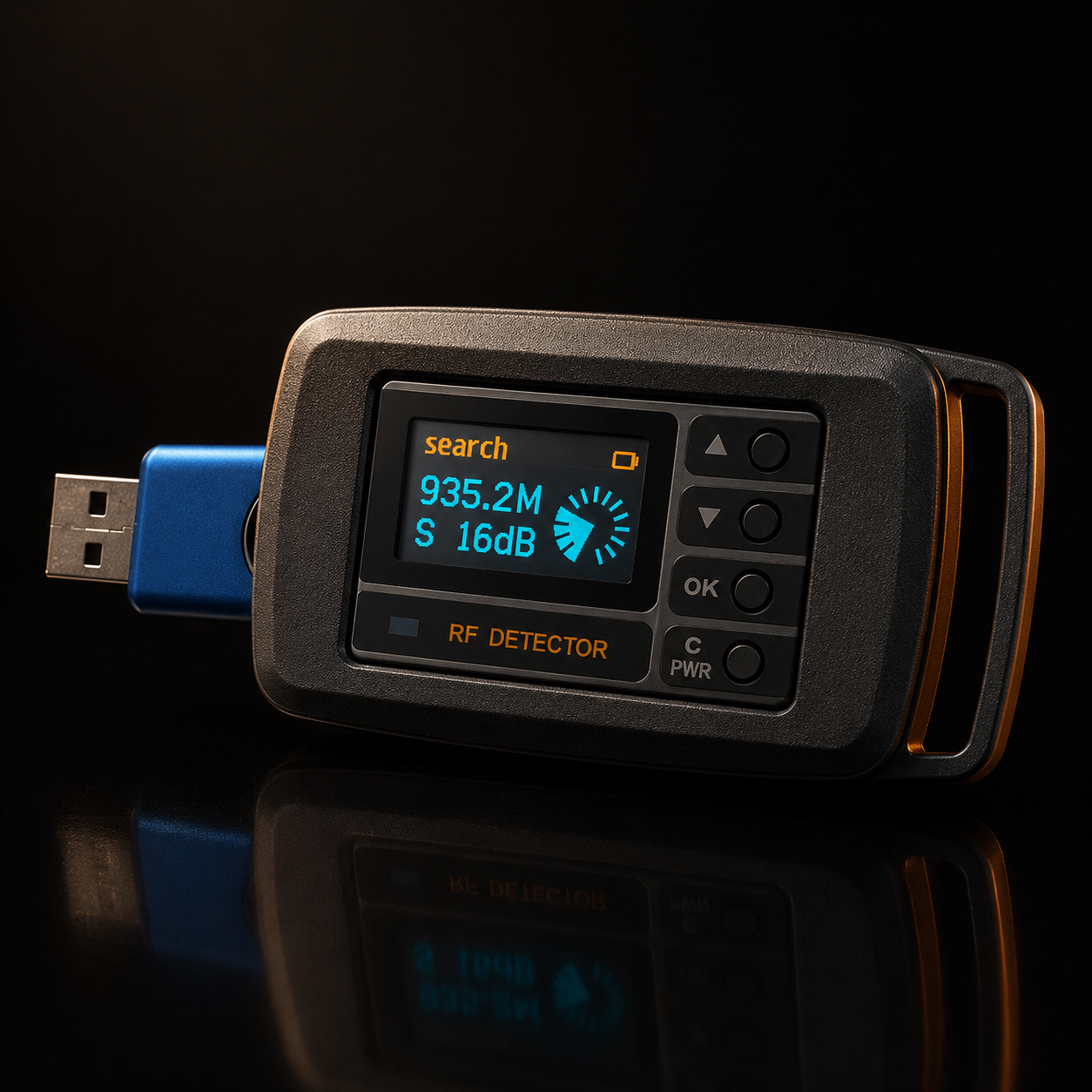
SENTINEL
Pocket-sized superheterodyne sweep across 40 MHz–3.8 GHz with signal-type identification — the core instrument for a room check.
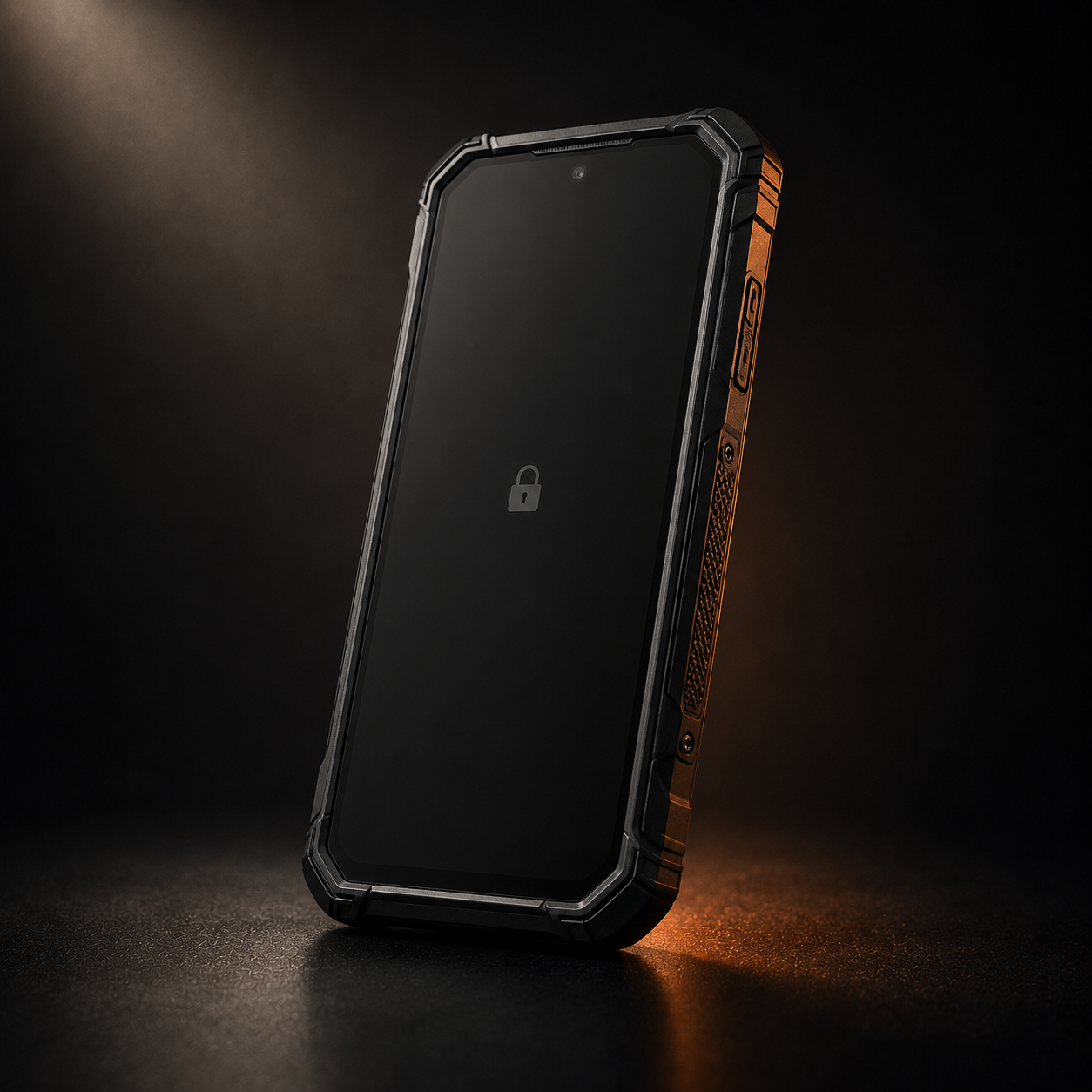
CIPHER
For travellers whose calls are the actual target: hardened handset with encrypted voice and IMSI-catcher detection.
- A device that is powered off or recording only to internal storage does not radiate and cannot be found by RF alone.
- Wired cameras and microphones without a transmitter require visual and optical inspection.
- Motion-triggered devices may be silent during your sweep — repeat the check at different times where the stay matters.
Frequently
asked.
Can a bug detector find a hidden camera in a hotel room?
Yes, when the camera is transmitting. Wi-Fi and GSM cameras radiate continuously or in bursts, and an RF detector such as the Sentinel identifies that transmission and lets you narrow down its position. Cameras that record only to an internal SD card are not radiating and require optical lens detection instead.
How long does a hotel room sweep take?
A focused sweep of a standard room takes about twelve minutes: a corridor baseline, a two-height perimeter pass, sight-line checks on fixtures, and an optical pass on suspicious objects. A suite or a longer stay warrants repeating the check.
Is it legal to sweep a hotel room for surveillance devices?
Checking a room you are lawfully occupying for devices directed at you is legal in most jurisdictions, and detection equipment is legally sold across the EU and Switzerland. If you find something, contact management and the police rather than removing it yourself.
What should I do if I find a hidden camera?
Leave it in place, photograph it and its position, note the time, and contact hotel management and local police. Preserving the device where it was installed protects the evidence and any later claim.
Find a GPS tracker on your car
Where trackers are hidden, how to detect them, and what a detector can actually see.
Airbnb & short-term rental check
A privacy check for rentals, where hosts control the fixtures and the network.
Executive travel in the Gulf
A repeatable privacy check for suites, meeting rooms and cars across Dubai, Riyadh and Doha.
Villa & household privacy
Check a villa or serviced residence where contractors, staff and agents have all held keys.
Executive & boardroom meetings
Protect a sensitive meeting: sweep the room, control signals, secure the calls.
Family office & DIFC boardroom
Meeting hygiene for family offices and investment committees in Dubai, Abu Dhabi and Riyadh.
Yacht & private aviation
Clear a cabin or charter aircraft where crew, charter guests and yard contractors rotate.